RDHS Office: 07850 030 791
hello@rdhs-ltd.co.uk
RDHS Limited – Health and Safety, Event SafetyRDHS Limited – Health and Safety, Event SafetyRDHS Limited – Health and Safety, Event SafetyRDHS Limited – Health and Safety, Event Safety
  • About Us
    • Our Aims
    • Our Team
  • Services
    • Health & Safety Management
    • Health & Safety Support
      • Emergency Line & RIDDOR Support
      • Health, Safety & Quality Assurance Meetings
      • On-Site Health & Safety Support Days
      • Fire Safety Calculator
      • Phone & Email Support
    • Event Safety Management
    • Assurance and Insight Programmes
      • Audit Benchmarking Service
      • Performance Review Meetings / Key Performance Indicators
      • Personal Injury Insurance Claims Management
      • Pool Safety Audit (Pool Assure)
      • Reactive Monitoring Programme / Accident & Incident Investigations
      • Support for Quest & Green Flag Venues
      • Unannounced Safety Inspections (USI)
    • RDHS Lead – Learning and Development
      • Automatic External Defibrillation
      • Emergency First Aid at Work
      • Evacuation Chair Course
      • Fire Safety Awareness Course
      • First Aid at Work Course
      • Food Safety In Catering Course
      • IOSH Managing Safely® Course
      • RDHS Lead: Online Health and Safety Inductions
      • Safe Moving and Handling Course
      • First Aid Needs Calculator
      • Spectator Safety Management Course
    • RDHS Engage – Our Communications
      • RDHS Engage – Online Resource Library
  • Case Studies
    • Global Events
    • UK Events
    • Sport and Leisure
  • Contact Us
  • Client Login
  • E-Learning Moodle
  • RDHS AIR – Reports
  • RDHS AIR – Checklists

HEALTH AND SAFETY INDUCTION

INDUCTION PROCESS

This induction provides the basic information to ensure you are able to do your job safely, and should be completed alongside learning on site where you will understand the specific safety elements associated with the role and tasks.

Please ensure you read through this thoroughly.

Take notes, think about some of the points raised and highlight any areas that you want to know more about, these can be discussed with your Manager.

WHY IS HEALTH & SAFETY IMPORTANT?

It helps to reduce harm and save lives!!

We have a moral Duty of Care:

Nobody should be harmed whilst working

How would an injury affect your friends and family?

Helps to save cost:

Insurance claims and increased premiums

Staffing: loss of staff through injury / extra staff needed / extra training needed / time required to investigate

Repair of machinery or facilities

Improves our reputation:

People want to work for us

A good reputation promotes business

But ultimately……..it’s the Law

Health and Safety at Work Act 1974 is the over-riding piece of legislation to govern safety in the UK.

It stipulates your employer must…

Ensure the workplace is safe and without risks

Ensure plant and machinery are safe and that safe systems of work are set and followed

Ensure articles and substances are moved, stored and used safely

Provide adequate welfare facilities

Provide information, training and supervision

Your Health & Safety Responsibilities are to…

Fully comply with the Health & Safety Policy Statement

You must take reasonable care of yourself and others

Co-operate with your employer and each other

Correctly use items in accordance with training or instruction

Not interfere with health and safety equipment

Report accidents, incidents, hazards, faults etc

Follow safe practices

Use PPE and safety equipment

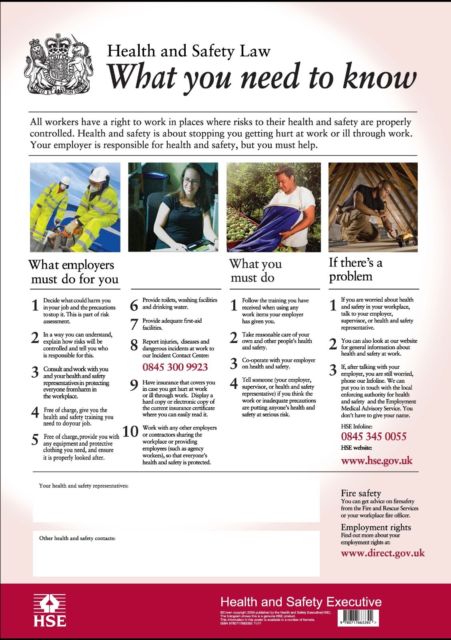
Look out for this poster.

It will give you further details, and names of the Appointed Health and Safety responsible persons within the site and organisation.

Fire Sign

FIRE SAFETY & EMERGENCY ACTION PLANS

Fire can have a damaging impact on people, property and business. A number of measures are in place to prevent fire:

  • Fire Risk Assessment conducted
  • Fire Detection and Alarm Systems installed
  • Fire Fighting Equipment available
  • Fire Training

What do you need to start a fire?

The Fire Triangle

  • A Source of Ignition
  • Fuel
  • Oxygen

What can you do?

  • Always maintain good housekeeping

                    ο prevent build-up of combustible materials

                    ο tidy away trailing cables and ensure walkways are clear

                    ο unplug and turn off electrics when not in use

  • Report defects that you see
  • Keep sources of ignition and potential fuels to a minimum
  • Ensure all flammable liquids are properly stored
emergency-exit

Emergency Action Plan (EAP)

Refer to your sites Emergency Action Plan for details of what to do if you discover a fire or what to do if you hear the alarm.

  • Certain staff will have defined responsibilities / functions in the event of an emergency
  • Fire Action notices are displayed giving clear and concise instruction of the routine to be followed in the event of a fire
  • Staff are advised not to attempt to tackle a fire, unless they have been trained to do so
Indoor Climbing Image

ACCIDENTS AND INCIDENTS

Accident – is an occurrence whereby either an employee or a member of the public suffers a personal injury, however minor.

Incident – is any occurrence outside normal operations of the site / facility which results in damage to property, equipment or a ‘near miss’. Incidents have the potential to cause personal injury.

Near Miss – an event that, while not causing harm, has the potential to cause injury or ill health.

All accidents, incidents and near misses are recorded. This ensures that they can be investigated / reviewed, and measures put in place to prevent them from happening again.

Certain records will need to be reported to the Health and Safety Executive (HSE):

  • Work-related accidents which cause death to employees & / or members of the public
  • Work-related accidents which cause certain serious injuries
  • Diagnosed cases of certain industrial disease
  • Certain dangerous occurrences
  • Gas incidents
first-aid-image

FIRST AID

Treatment given to a casualty to preserve life, to limit the effects of injury or illness and/or to promote recovery.

A duty is owed towards staff (legally) and members of the public (duty of care) to have a First Aid provision available at all times.

First Aid administered is recorded on an Accident/Incident Report Form.

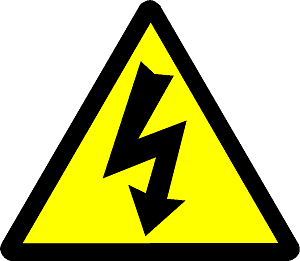
El-risk$

SAFETY SIGNAGE

You will see a wide range of signs around the workplace.

A number of these signs are related to safety and are in place to provide information or instruction.

Some are in place by law:

  • Prohibition
  • Warning
  • Mandatory
  • Emergency
  • Fire Safety
Gym Bikes Image

LONE WORKING

Lone Workers are those “who work by themselves without close or direct supervision”. It includes alone, separate, in remote areas, at home, outside normal hours, away from their fixed base.

Some of the risks involve:

  • Inability to get help in the event of an accident
  • Inadequate provision of welfare arrangements
  • Violence
  • Injuries from manual handling and chemicals

If you undertake Lone Working there will be a Risk Assessment in place with suitable controls which you will be advised of, and trained in.

Child Protection

SAFEGUARDING

The following can be signs of abuse, if you suspect any of the following talk to a Duty Manager or the Centre Manager.

Physical Abuse – may involve hitting, shaking, throwing, poisoning, burning or scalding, drowning, suffocating, or otherwise causing physical harm, including by fabricating the symptoms of, or deliberately causing, ill health.

Emotional Abuse – is the persistent emotional ill-treatment of a child or vulnerable adult such as to cause severe and persistent adverse effects on the victim’s emotional development or self-esteem.

Sexual Abuse – involves forcing or enticing a child or vulnerable adult to take part in sexual activities, whether or not the victim is aware of what is happening.

Neglect – is the persistent failure to meet a child’s or vulnerable adult’s basic physical and/or psychological needs, likely to result in the serious impairment of their health or development, such as failing to provide adequate food, shelter and clothing or neglect of, or unresponsiveness to basic emotional needs. In vulnerable adults this may appear to be as a result of self-neglect but still requires action.

Financial Abuse – is particularly relevant to vulnerable adults and may include theft, fraud, exploitation and pressure in connection with wills, property or inheritance or financial transactions.

What do I do if a child or vulnerable adult discloses to me that they are being abused?  

Stay calm:

  • Listen carefully
  • Find an appropriate, early opportunity to explain that it is likely that the information will need to be shared.
  • Allow the victim to continue at their own pace
  • Ask questions for clarification only and at times avoid asking questions that suggest a particular answer.
  • Reassure the victim that they have done nothing wrong in telling you
  • Tell them what you will do next and with whom the information will be shared
  • Record in writing what was said using the victim’s own words as soon as possible. Note the date and time, any names mentioned and to whom the information was given. Ensure the record is signed and dated.
  • Relay this information as soon as possible to the Duty Manager, who will be expected to report your incident to the Council Safeguarding Officer.

Do not:

  • Dismiss the concern
  • Panic
  • Allow your shock or distaste to show
  • Probe for more information than is offered
  • Make promises you cannot keep: such as agreeing not to tell someone else, keeping secrets
  • Speculate or make assumptions
  • Approach or contact the alleged abuser
  • Make negative comments about the accused person

Remember that you are not responsible for deciding whether or not abuse has occurred. This is the task of the police and child and adult protection agencies following referral to them.

What do I do if I have suspicions that a colleague may be abusing a child or vulnerable adult, or not following good practice?

  • Never do nothing
  • Write down the details of your discussion with the person
  • Pass all relevant information to the Centre Manager

The Duty Manager should then take appropriate action to ensure the safety of the child or vulnerable adult and any other people who may be a risk.

Work Equipment

WORK EQUIPMENT

Any work equipment used by staff is covered by this term and includes:

  • Hand Tools
  • Power Tools
  • Ladders
  • Computers / Photocopiers
  • Lifting Equipment

The risks of using these are controlled by considering the following:

  • Do check the equipment is in a safe condition before using it
  • Do inform Managers if you believe the equipment is unsafe and not working properly
  • Do follow instructions and procedures for the safe use of equipment
  • Don’t use equipment unless you are trained to do so
  • Don’t use equipment which has an out of order sign attached or is in quarantine
  • Don’t use equipment in public areas unless safe to do so
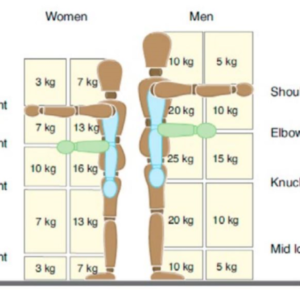
MH 1

MANUAL HANDLING

Manual Handling is defined as “Any transporting or supporting of a load by hand or by bodily force”.

It includes:

  • Lifting
  • Putting Down
  • Pushing & Pulling
  • Carrying & Moving

Incorrect manual handling is one of the most common causes of injuries at work but is sometimes a necessary part of the job.

If you need to undertake a Manual Handling task, follow these steps:

  • Think before lifting / handling and plan the lift – use equipment where provided
  • Don’t lift or handle more than can be easily managed – get help from colleagues or break the load down into smaller parts
  • Start with a good posture and adopt a stable position
  • Get a good hold
  • Keep the back straight and use your legs to lift
  • Keep the load close to the body
  • Move smoothly and avoid twisting
  • Keep the head up when handling
  • Put down, then adjust
COSHH

HAZARDOUS SUBSTANCES

Most people will come into contact with substances whilst at work.

The Control of Substances Hazardous to Health Regulations (COSHH) ensure that necessary measures are in place to protect people:

  • Assessments are completed for the substances
  • Staff are provided with Personal Protection Equipment (PPE)
  • Chemicals are stored appropriately and labelled

All Hazardous Substances will hold a label - see image on the left

You must:

  • Ensure you understand the guidelines for use before using any chemical
  • Use PPE provided
  • Not leave chemicals unattended
  • Wash your hands after using the substance
Pool Inflatable Image
Tennis Courts Image

REMEMBER.......

  • Health and Safety is Law

  • Health and Safety is about common sense

  • Health and Safety is no accident – it has to be managed and starts with you!

Once you have read and understood the Health and Safety Induction, please 'submit' to indicate completion of your induction.

SUBMIT

Contact us

Phone:
07850 030 791

Email:
hello@rdhs-ltd.co.uk

Useful Links

  • Home
  • Contact Us
  • Courses
  • Case Studies
  • Terms and Conditions

#drivenbyexcellence

#inspiringnewstandards

Copyright © 2016-2021 RDHS Safety Consultancy Limited. All rights reserved. l Registered in England and Wales No. 7859967
  • About Us
    • Our Aims
    • Our Team
  • Services
    • Health & Safety Management
    • Health & Safety Support
      • Emergency Line & RIDDOR Support
      • Health, Safety & Quality Assurance Meetings
      • On-Site Health & Safety Support Days
      • Fire Safety Calculator
      • Phone & Email Support
    • Event Safety Management
    • Assurance and Insight Programmes
      • Audit Benchmarking Service
      • Performance Review Meetings / Key Performance Indicators
      • Personal Injury Insurance Claims Management
      • Pool Safety Audit (Pool Assure)
      • Reactive Monitoring Programme / Accident & Incident Investigations
      • Support for Quest & Green Flag Venues
      • Unannounced Safety Inspections (USI)
    • RDHS Lead – Learning and Development
      • Automatic External Defibrillation
      • Emergency First Aid at Work
      • Evacuation Chair Course
      • Fire Safety Awareness Course
      • First Aid at Work Course
      • Food Safety In Catering Course
      • IOSH Managing Safely® Course
      • RDHS Lead: Online Health and Safety Inductions
      • Safe Moving and Handling Course
      • First Aid Needs Calculator
      • Spectator Safety Management Course
    • RDHS Engage – Our Communications
      • RDHS Engage – Online Resource Library
  • Case Studies
    • Global Events
    • UK Events
    • Sport and Leisure
  • Contact Us
  • Client Login
  • E-Learning Moodle
  • RDHS AIR – Reports
  • RDHS AIR – Checklists
RDHS Limited – Health and Safety, Event Safety